
Living Eyes v3
208 eye colours Starfield ships 12. This adds 196 more. Colour alone would not have got there. The iris is one pigment over a blue base — a much narrower range than hair — so fifty flat shades would have landed dozens of near-identical pairs. What actually separates real eyes is surface structure.
Not a figure of speech. The white of the eye ships with its roughness map set to exactly 1.0 — the value you would use for chalk — and there is no glossy region anywhere in that map. A wet eyeball with no specular response has no catchlight, and a face with no catchlight reads as dead.
That is the whole problem, and it is a one-value problem.
What this does
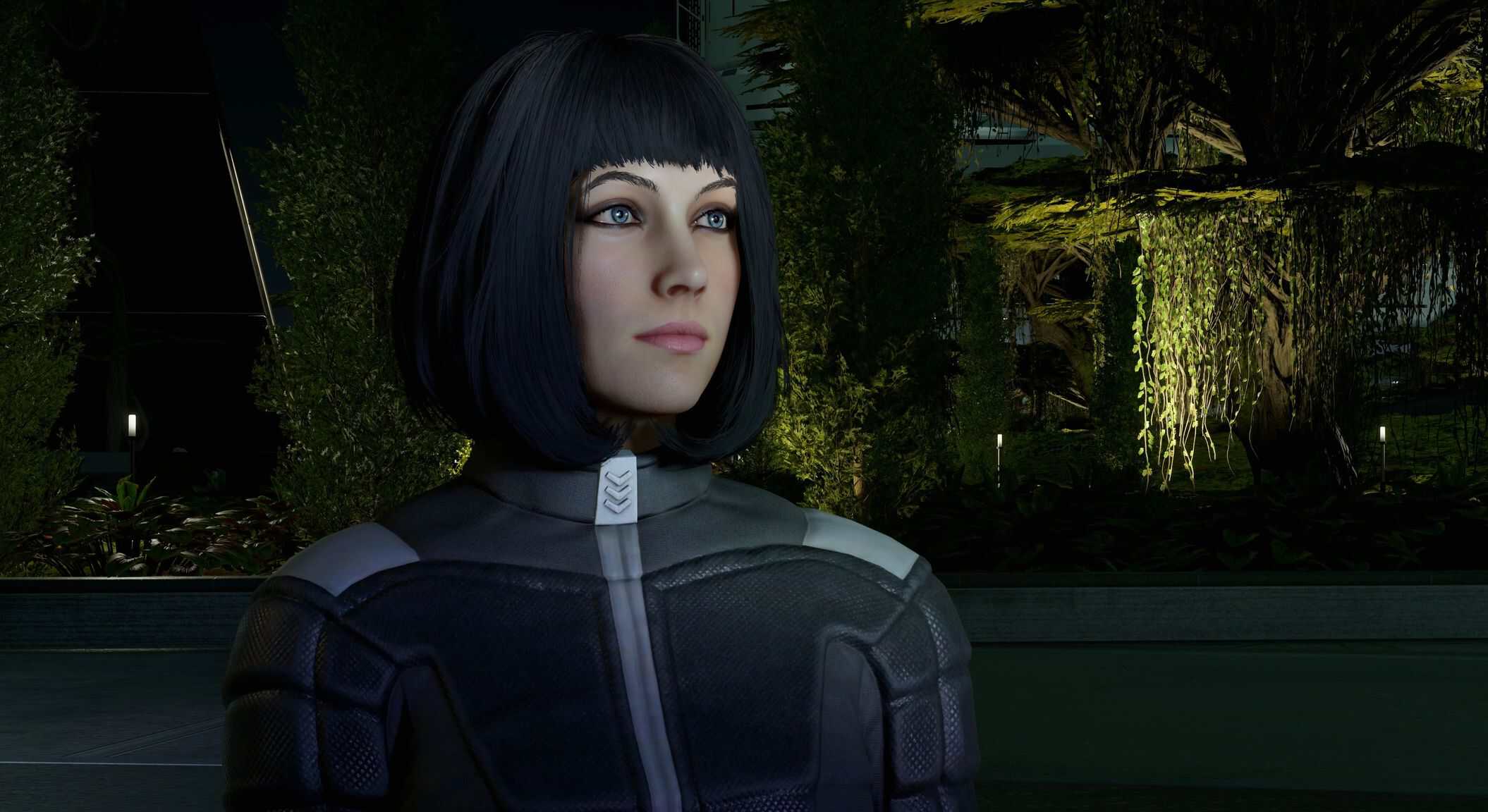
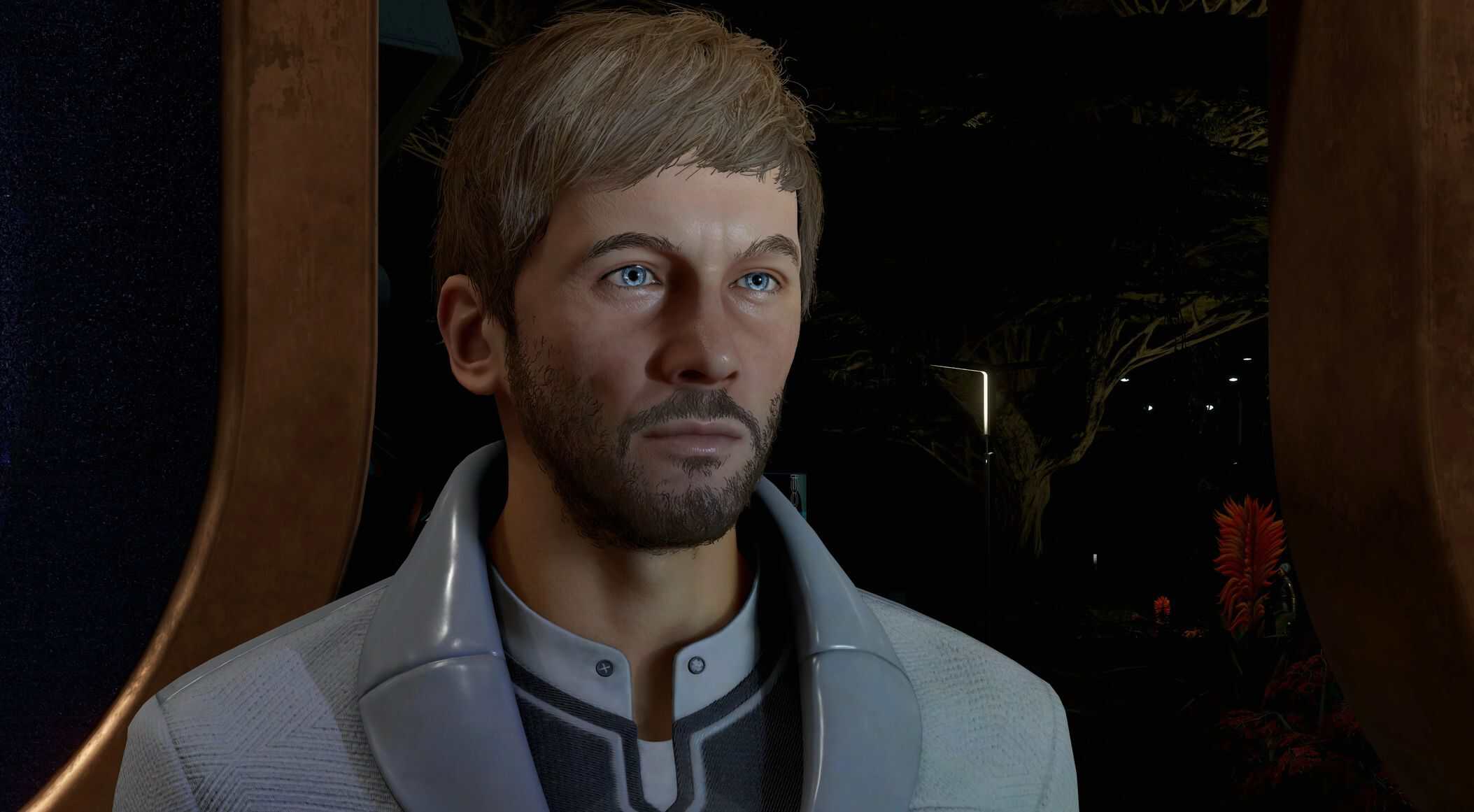
The eyes are wet. A proper corneal cap now sits over the pupil and iris — the glassy surface that catches light. The white goes from 1.000 to 0.30, drier toward the corners where the tear film thins.
vanilla now
cornea 0.86 0.10 glassy, gives the catchlight
the white of the eye 1.000 0.30 wet
tear / wetness overlay 0.83 0.30
Irises have an edge again. A real iris has a dark limbal ring where it meets the white. Starfield’s measures 0.005–0.129 against a natural 0.10–0.25 — and on some colours it is negative, the rim brighter than the iris. Without it the iris dissolves into the sclera through a soft halo. All 11 iris textures get one.
196 new eye colours. 12 becomes 208.
What this deliberately does NOT do
It does not brighten the whites. They measure luminance 0.629 in vanilla, which sits inside the natural 0.55–0.72 range. Brightness was never the defect. Only the yellow cast was pulled back, and gently.
It does not touch the iris fibre detail. Bethesda’s stroma painting measures 0.087–0.121 against a natural 0.06–0.12. The painting was always good — it was the framing that was missing.
Everything above is measured, not guessed. Where vanilla was already right, it was left alone.
Why 196 colours and not 50
Because colour alone cannot give you fifty distinguishable eyes. The iris is one pigment over a blue base — a far narrower range than hair — and a list of fifty flat colours would land dozens of near-identical pairs.
What actually separates real irises is surface structure. So every shade is a colour plus a graded feature profile, taken from a population study of iris surface features and distributed the way that research says these things actually occur:
– Flecked — pigment spots. A light-iris feature (58% of Europeans, ~17–22% in East and South Asian cohorts), so it only appears on lighter shades.
– Ringed — central heterochromia, the amber collarette. The single strongest cue that stops a blue eye reading as a flat contact lens.
– Starburst — strong Fuchs’ crypts.
– Marbled — crypts plus contraction furrows.
– Veiled — heavy contraction furrows. These extend further on darker irises, so this one is reserved for the dark end.
– Nodular — Wolfflin nodules. 37% of Europeans, essentially 0% in brown-eyed cohorts — light irises only.
Four different vanilla iris paintings supply the underlying fibre structure, so the variety is in the stroma as well as the hue. The result: no two shades are both within ΔE 5 of each other and carrying the same feature profile and stroma.
Your NPCs are safe
Starfield’s 23 vanilla eye-colour slots are shared between the character creator and every NPC in the game. Repaint them and you restyle the world.
This never touches the 12 vanilla slots. They stay byte-identical and stay first; all 196 new shades are appended after them, where no existing NPC can reach. Your game world looks exactly as Bethesda shipped it. Only your own character gains options.
Optional file: NPC eye colours
A separate download, because it is a bigger change and you should choose it deliberately.
It gives 1,953 NPCs natural eye variety — and fixes something genuinely odd in the base game. 186 NPCs ship with Red, RedDevil or Sulfur eyes, and they are not villains: a cluster of ordinary Cydonia civilians, a UC ambassador, marines, engineers, scientists. All walking around with literal RedDevil eyes.
Generic NPCs are remapped within the colour family they already had — a brown-eyed NPC gets a natural brown, never a blue. Nobody’s eye colour changes character; it just stops being one of eleven flat presets. 730 named characters keep exactly what Bethesda gave them.
Two honest warnings. It overrides 1,953 NPC records, so it conflicts with any face or NPC overhaul — load that after this one, or skip the file. And it bakes in English names, so skip it if you play in another language.
Two things people trip on
– Restart the game fully. Not a save load. Loose textures are only read at startup.
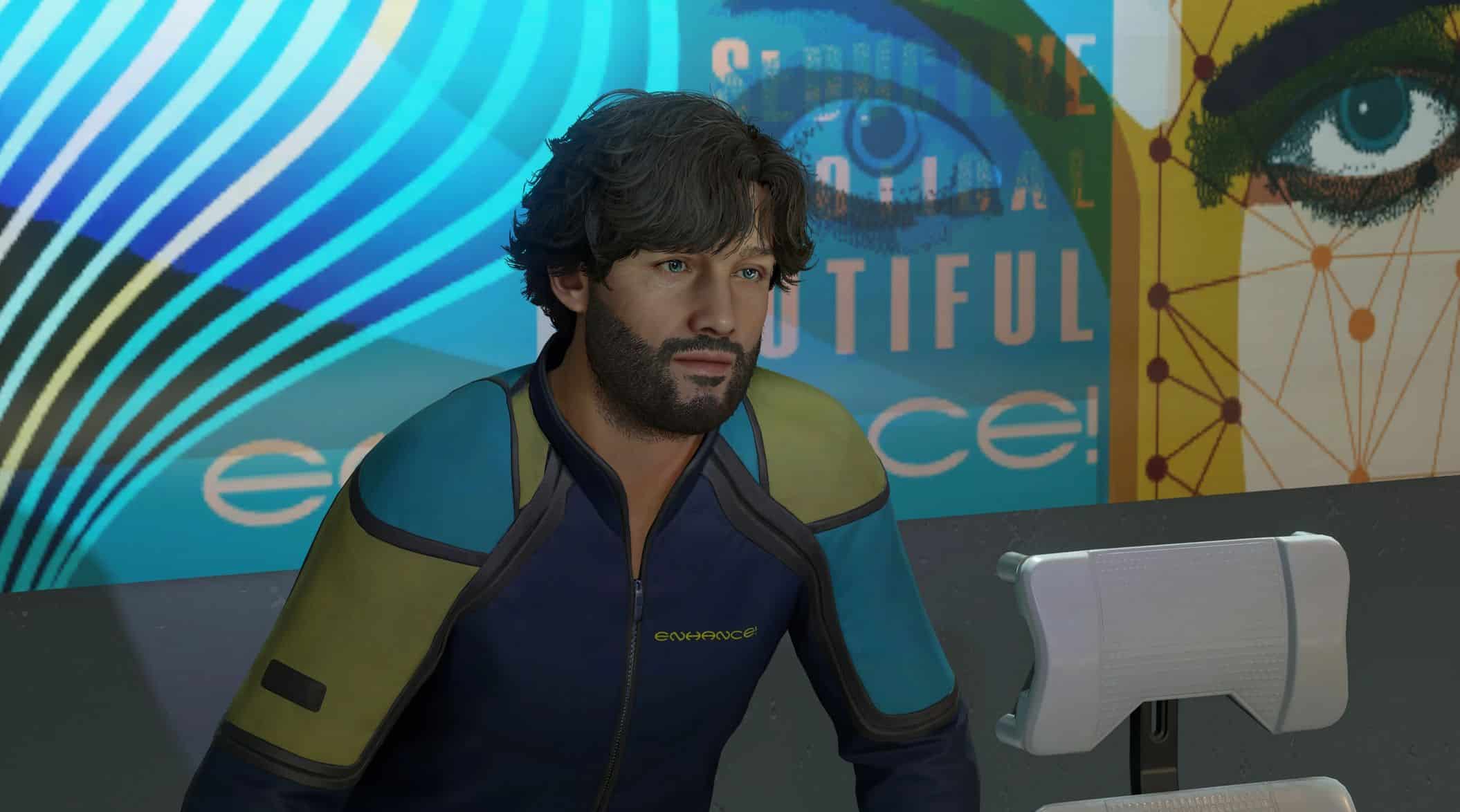
– Before uninstalling, set your character back to one of the 12 vanilla colours at an Enhance! clinic. A save pointing at a slot that no longer exists cannot resolve it.
No script extender, no dependencies. Loose textures and one small plugin.
Don’t like the whites?
There are four alternate sclera treatments in the archive, including one that leaves the vanilla colour completely untouched so you can judge the wetness change on its own. One file to copy. Details in the readme.